2026 7th International Conference on Electronic Communication and Artificial Intelligence Was Held
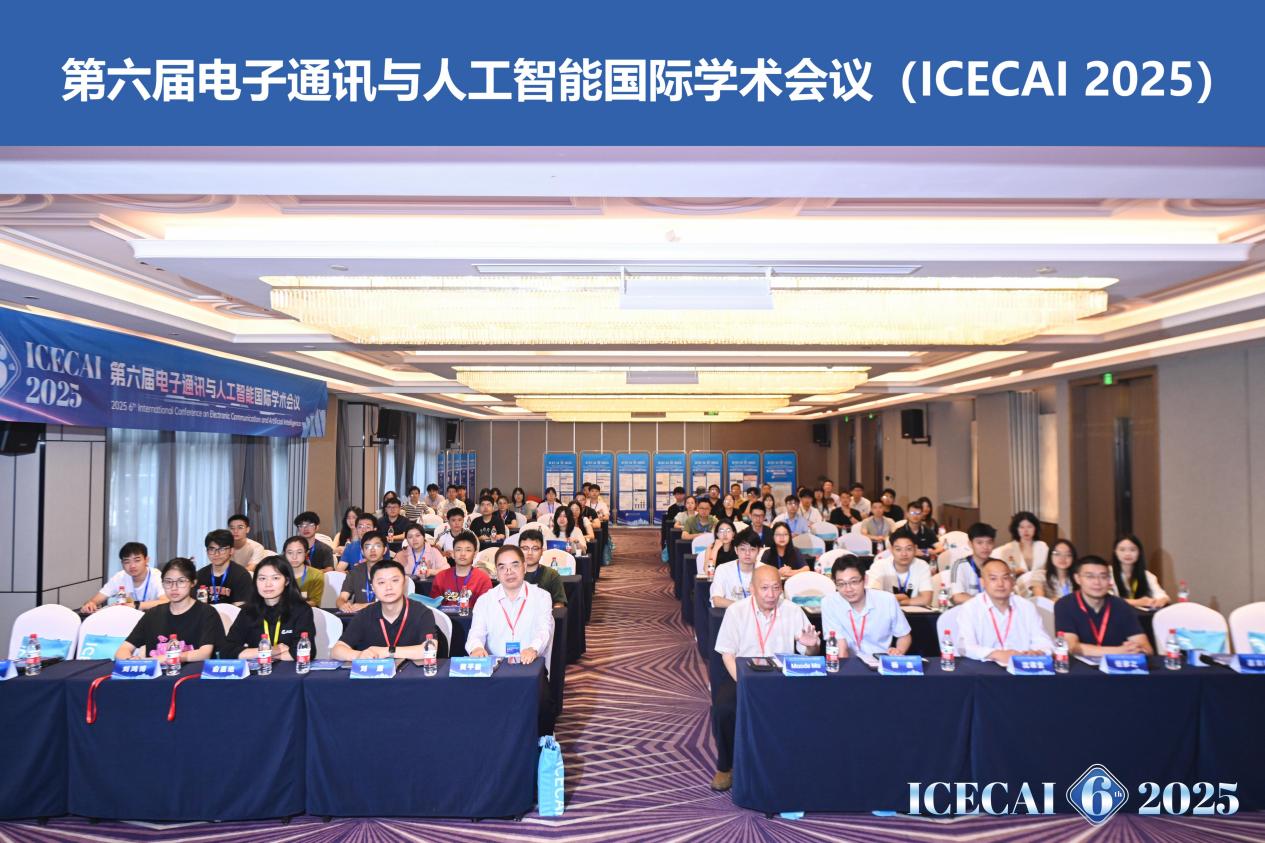
From June 20 to 22, the 6th International Conference on Electronic Communications and Artificial Intelligence (ICECAI 2025) was held in Chengdu. The conference was conducted in a hybrid format, featuring a diverse program that included keynote speeches, oral presentations, poster sessions, and awards for outstanding papers and oral presentations. It attracted over 100 experts, scholars, and industry representatives to engage in in-depth discussions on cutting-edge developments in the fields of electronic communications and artificial intelligence.

The opening ceremony was chaired by Professor Ren Yanzhi of the University of Electronic Science and Technology of China (UESTC). Professor Yang Jie of UESTC, the conference chair, delivered the opening address. Subsequently, keynote presentations were given by Professor Fan Pingyi of Tsinghua University, Professor Ma Maode of Qatar University, Professor Liu Tang of Sichuan Normal University, Professor Shen Mouquan of Nanjing University of Technology, and Associate Professor Yu Jiadi of Shanghai Jiao Tong University.
In his presentation, Fan Pingyi introduced the AEGAN model, which integrates autoencoders and generative adversarial networks (GANs). This model enables dual-perspective detection of abnormal internal states in industrial equipment through machine sounds, demonstrating excellent performance on the DCASE dataset and providing a novel diagnostic solution for Industry 4.0 digital twin systems; Ma Maode proposed a blockchain-based Incremental Lifelong Learning Intrusion Detection System (ILL-IDS). By storing pending attack data and integrating it with traditional security agency labeling and training, the system achieves continuous defense against unknown dynamic threats in vehicle-to-everything (V2X) networks, significantly reducing computational time in public dataset validation.
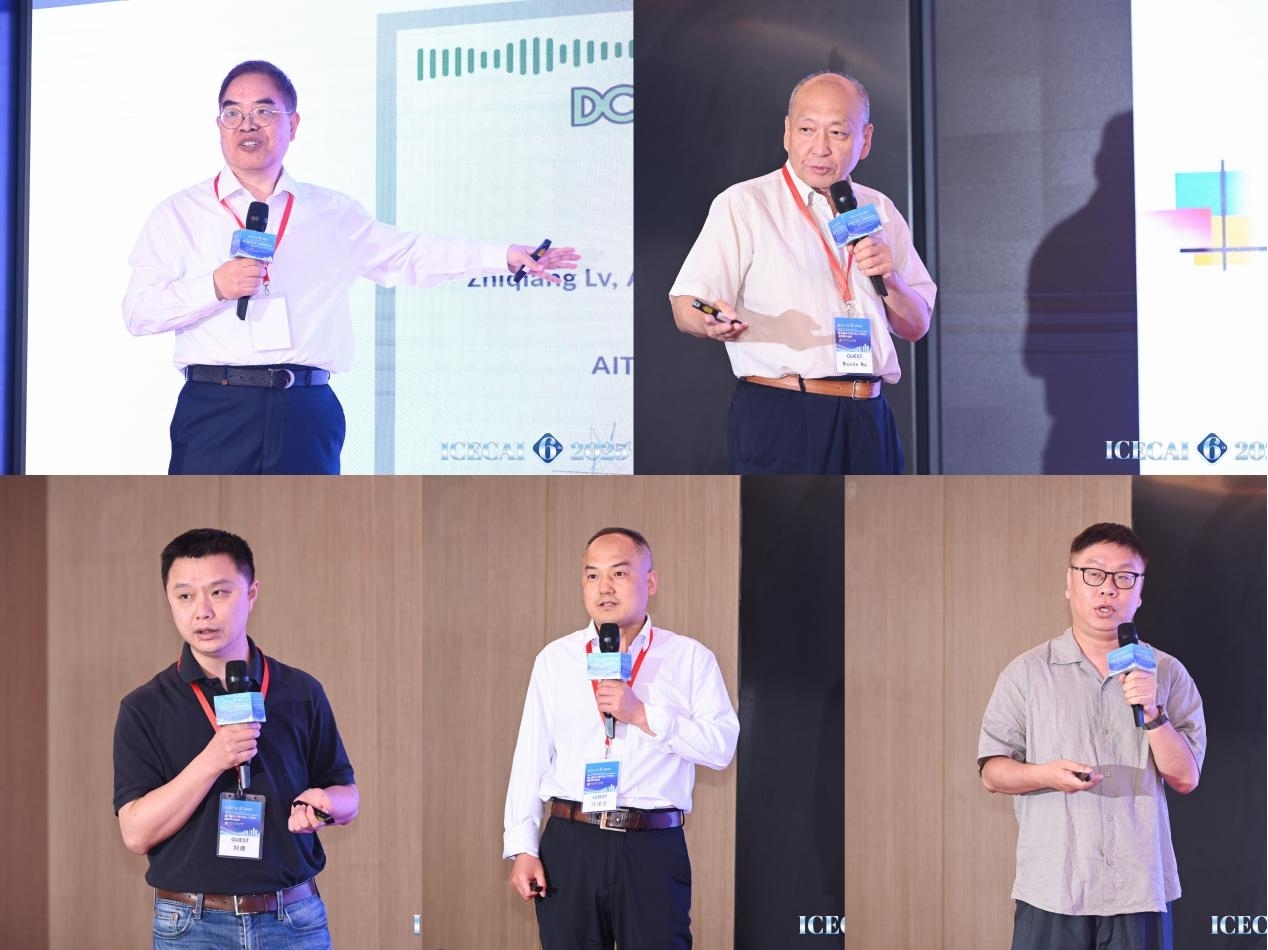
Additionally, in his report titled “Research Progress on Efficient Wireless Charging Networks,” Liu Tang proposed a multi-dimensional efficiency optimization scheme: enhancing energy harvesting efficiency in the back lobe, dynamic power allocation response, electromagnetic security protection, and performance gains from multipath effects, thereby overcoming application bottlenecks; Shen Mouquan presented a report titled “Key Technologies for Data-Driven Intelligent Manufacturing Control and Optimization,” proposing a three-pronged strategy of finite-time control, disturbance observation, and adaptive planning. He developed an event-triggered mechanism to ensure stability, broke through the bottlenecks of data-driven closed-loop optimization, and demonstrated its effectiveness in industrial scenarios; Yu Jiadi, in his presentation titled “RFID-Based Side-Channel Eavesdropping Attacks,” proposed a new paradigm for passive RFID fingerprint eavesdropping, overcoming environmental noise constraints to achieve highly robust voice capture. He revealed security risks in human-computer interaction and constructed an active defense framework, reshaping the noise-resistant voice security system from both offensive and defensive perspectives.
The conference also featured 13 oral presentations and 25 poster sessions. During the oral presentations, 13 scholars from universities across the country shared their latest research, primarily covering the following three areas: optimization of intelligent sensing and edge computing, collaborative decision-making in autonomous systems, and intelligent fusion of cross-domain data, providing attendees with concrete references for technical applications.
The conference included a special academic excellence recognition session to honor the innovative achievements of young scholars. Following deliberation by the organizing committee, three major awards were presented: the Outstanding Paper Award, the Outstanding Young Scholar Presentation Award, and the Outstanding Poster Award. These awards aim to encourage the next generation of researchers to explore cutting-edge fields and jointly shape a new landscape for the development of electronic communications and intelligent technologies.
It is reported that this conference was hosted by the University of Electronic Science and Technology of China (UESTC) and organized by the School of Computer Science and Engineering (School of Cyberspace Security) at UESTC, with AiScholar providing comprehensive technical support throughout the event.